Keynote Speakers

Jason Bennett Thatcher
 Abstract: In this keynote, Dr. Thatcher will discuss the importance of four concepts for scholars seeking to publish in UT-Dallas publications. First, scholars must be well read. That is, they must be grounded in classical and contemporary research methods and theories relevant to a broad understanding of emerging phenomena. Second, scholars must build resources and skills to conduct research. That is, they need to build teams with access to the tools and skills needed to develop and implement novel research designs. Third, scholars need to be ready to act when interesting opportunities arise. That is, they need to be able to distinguish between tactical projects (e.g., what’s trending) and strategic issues (e.g., what will endure) in order to have the mental bandwidth needed to pursue cutting-edge research. Fourth, scholars need to build a reputation that makes them a credible voice on a research topic. This means taking care to adhere to global standards of data collection, reporting, and analysis so that their work can be published in international journals. In presenting these concepts, Dr. Thatcher will provide a framework that scholars can use to build a systematic research agenda that leads to high-quality publications.
Biography
Jason Bennett Thatcher holds the Tandean Rustandy Esteemed Professorship at the Leeds School of Business at the University of Colorado-Boulder. He is also a Full Professor of Management Science at the Alliance Manchester Business School at the University of Manchester and an Honorary Professor at the University of Nottingham. He received the College of Business and Behavioral Science’s 2008 Undergraduate Teaching Excellence Award at Clemson University. He is or has served in senior editor and associate editor roles for several journals, Including Information Systems Research, Journal of the Association for Information Systems MIS Quarterly, Decision Sciences, AIS Transactions on HCI, Associate Editor at Information Systems Research, Database for Advances of Information Systems.
Jason studies individual decision-making, strategic alignment, and workforce issues related to the effective use of information technology in organizations. His more recent projects have focused on cybersecurity, social media, and digital upper echelons. Jason has published in journals such as MIS Quarterly, Information Systems Research, Journal of Applied Psychology, Harvard Business Review, and others.
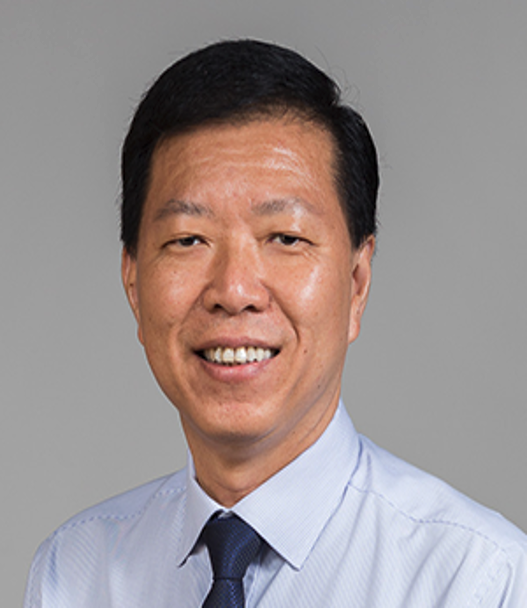
Hock Hai Teo
 Abstract: The integration of Artificial Intelligence (AI) in education marks a transformative shift in how knowledge and skills are imparted and acquired, presenting both unprecedented opportunities and significant challenges. This talk, “AI in Education: Implications for Humanity,” explores the multifaceted short-term and long-term impact of AI on the educational landscape. Based on a comprehensive literature review, we will share how AI is enhancing and optimizing personalized learning and enabling access to education for marginalized communities. At the same time, we will critically examine whether AI will pose significant risks to humanity development as AI in education can potentially start at a very early age and our dependence and reliance on AI is likely to increase over time. We hope this talk can spark interest among information systems researchers to research on AI in education to ensure a balanced discourse on its potential risks and rewards, and shed light on how humanity can harness these advancements to foster an inclusive, equitable, and effective learning environment for future generations.
Biography
Hock Hai Teo is Provost’s Chair Professor in the Department of Information Systems and Analytics, School of Computing at National University of Singapore. He is currently the Director of Humanities and Social Science Research at the Office of Deputy President (Research and Technology). Hock Hai is very passionate and focused on implementing three of his pet projects: 1) improving the healthcare service delivery models and outcomes through process improvement using healthcare technologies; 2) shaping the innovation capabilities of Singapore’s Small Medium Enterprises in today’s digital economy; and 3) enhancing the learning outcomes of pupils through better delivery of pedagogical content and building of competences via an adaptive, customizable learning platform. He has published extensively in the top information systems journals and conferences. In recognition of his outstanding contributions to the information systems discipline in terms of research, teaching and service, the Association of Information Systems honored him with an AIS Fellow award.